
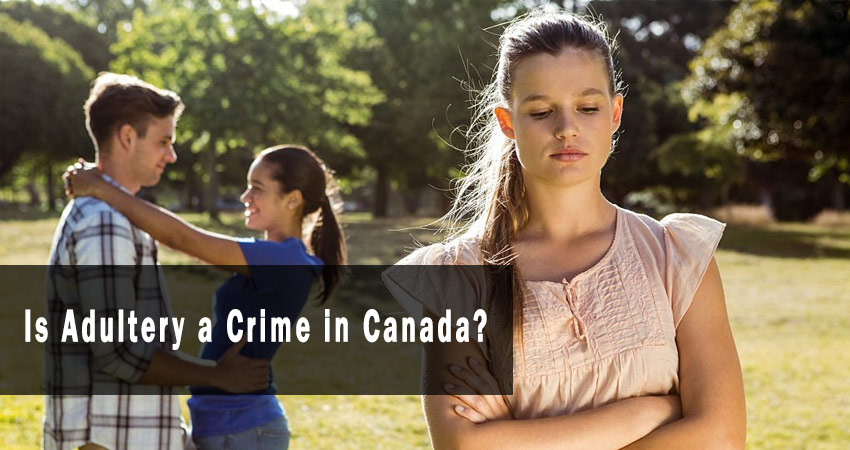
Adultery is a topic that raises many questions when it comes to relationships and marriage.
While it often leads to serious consequences within a marriage, many wonder if it also has legal implications in Canada. Adultery is considered to be a crime in many countries and states around the world. So what about Canada?
Is cheating illegal, or is adultery a crime here? Can cheating on your partner lead to legal consequences or even jail time? Shortly, no. The Canadian Law doesn’t treat adultery as a punishable offence, but takes it as one of the valid grounds for couples to seek divorce.
Let’s explore the Canadian legal perspective on adultery and how it can impact divorce proceedings.
Get Professional Legal Counsel from Moose Jaw Divorce Lawyers today!
What is Adultery in Canada?
In Canada, adultery refers to a situation where one spouse engages in a sexual relationship with someone outside their marriage. It is considered a form of marital misconduct and can be used as a ground for divorce. While adultery itself does not directly affect the division of property or custody arrangements, it can influence the court’s view of a spouse’s behaviour during divorce proceedings.
To prove adultery, the accusing spouse must provide evidence of the affair, which can include witness testimony or other documentation. Adultery remains a personal and legal issue, reflecting the breach of marital vows.
Another confusion that often arises from related discussion involves the differences between adultery and infidelity. Both share some common features, such as being misbehaviours that hurt or break marital commitment. But infidelity surrounds a broader field where adultery is only a subset.
Secret platonic affairs, breaches of contract, or trust are all examples of infidelity. But they can’t force a separation if not described as adultery.
Is Adultery a Crime in Canada?
No, in Canada, the law of the federal divorce act doesn’t consider adultery to be a crime at all.
The federal Divorce Act only recognizes adultery as a ground for divorce, meaning it can be used as a reason to legally end a marriage. However, it does not carry any criminal penalties and does not affect property division or financial support in most cases.
Keep in mind that adultery can have legal repercussions if it somehow happens before children, threatening their moral and emotional harmony.
Canadian Law for Adultery
Adultery is a sensitive topic, especially when it comes to the legal system. It has a different legal status in Canada because of changing social norms and shifting attitudes toward fidelity.
According to the federal divorce act, adultery isn’t directly a crime but is considered one of the main grounds for divorce in Canada. So, if you find that your partner is unfaithful while making out with another person and you do not agree with this, you can seek a divorce.
However, there are specific rules of ‘breakdown of marriage’ that must be met to be able to divorce in Canada, which are:
- The couple has to live apart for a year
- There’s been adultery between the spouses
- The spouse seeking divorce has treated the other spouse badly enough that they can no longer live together.
How Does Adultery Affect Divorce Proceedings in Canada?
Adultery can be a ground for you to separate from your partner legally. If you find adultery in your partner, it depends on you how it will affect the relationship.
Since we don’t have the same standard of living or separation ideas, some may still be living together and finding a cheating partner. In contrast, others may separate from their partner and try to have a legal divorce.
Let’s see how adultery affects divorce proceedings in Canada.

Ground for Divorce
Although adultery is a recognized ground for divorce, it isn’t necessary to prove fault to get a divorce in Canada. This means that a spouse can initiate divorce proceedings based on the other spouse’s infidelity.
Property Division
Property division during a divorce is hard, and adultery can make it more complex. It may include the distribution of assets and debts acquired during the marriage. When dividing marital assets, the court may consider extramarital affairs. For instance, if any spouse used marital funds to support other activities, the court will include that.
Custody and Access
If the spouse decides to get apart due to adultery and they have children, it will greatly impact custody and access decisions for children. The court will consider the child’s best interest if they are old enough to express their decision.
In case the incident had a negative impact on the children or the child isn’t able to make their decision, the court will make decisions about their care and well-being.
7 Factors to Consider When Filing for Divorce Based on Adultery
Divorce isn’t always easy and straightforward for all people. And if the case is for adultery, it is even more stressful. If you are in such a situation and are considering getting divorced, here are some things you should consider before –
Timing
Timing is a crucial factor to consider because when you find out about adultery, you might be shocked. You may need a little bit of time to overcome the situation. It isn’t good to make a sudden decision to divorce your spouse at that time, especially if you have children. Divorce can badly impact children’s lives.
There are many cases where spouses make the divorce decision and then break it, considering the children’s future. If the cheating spouse admits their fault and the other spouse agrees, they may need a period to conclude.
Evidence
If adultery is the only reason for getting separated, then it won’t require you to show evidence to prove your partner’s fault. Because Canadian Law doesn’t consider it so important to show evidence to the court, as it is not an illegal issue in Canada.
However, if the divorce case goes to a custody battle, then evidence will become a crucial factor in the divorce proceedings.
A divorce appeal in Canada is dealt with by a superior court. That means, jurisdictions will go to great lengths to probe the authenticity of any claim before sentencing a separation. Indirect and vague evidence that can be easily contested by the alleged spouse won’t survive in the process. Usually, the court expects you to provide:
- Clear photograph or video
- Affidavit of the confessions
- Statement from an eyewitness
- Text messages or emails
Collecting and presenting proof in court requires strategic planning. The right evidence revealed at the right time is a strong way to refute an argument. You should:
- Get hands-on multiple evidence
- Seek the guidance of a legal professional
- Have a personal legal presenter on your behalf
- Wait till the context arises in the court demanding proof
Get Professional Legal Counsel from Moose Jaw Divorce Lawyer today!
Impact on Children
When filing for divorce based on adultery, the impact on children is a major factor to consider. Whether it is just a matter of infidelity or expands to divorce, it’s important to keep the children’s priority above all.
Sometimes parents can have narcissistic behaviour, so they are determined to obtain custody of the children, no matter what. Whatever happens, both parents should take prior children’s responsibility.
Property Division
Property division is a matter of thinking when it comes to divorce. If you find your partner cheating and want to divorce him, you should consider property division, as it can be complex and contentious, especially in cases involving adultery.
In this regard, you need to consider how infidelity may impact property division, including the distribution of assets and debts.
Spousal Support
Adultery may also impact spousal support decisions, although it is not an essential part of divorce or separation. According to the law, you and your spouse can negotiate spousal support payments or ask the judge to fix this for you.
Spousal support can be set up as a part of a separation agreement. The amount of spousal support entitlement depends on several factors.
Contact an expert spousal support lawyer for the best support regarding spousal claim.
Legal Representation
Whether it is the case of adultery, divorce or custody, legal representation is a must. If you don’t find legal counsel, you are in serious trouble and face many legal problems. Having an experienced lawyer on your side can help you with support and guidance throughout the process. It is also important to navigate the systems properly while protecting your rights.
Emotional Well-being
Divorce can be an emotionally challenging process, especially when adultery is involved. Therefore, it is important to protect your emotional well-being by seeking support from friends and family or working with a therapist.
Also, taking care of yourself during this time can help you make the best decisions for yourself and your future.
Statistics on Adultery In Canada
Adultery in Canada appears to be on the rise, with research indicating that more people are admitting to infidelity than in previous years. Approximately 28% of Canadians report having cheated on their partners at least once, marking a steady increase in recent years. Various factors contribute to this trend, including a decline in the social stigma associated with adultery and the increased accessibility of online platforms that can facilitate connections outside of marriage.
Infidelity remains one of the most common reasons for marital breakdown, and while it impacts divorce proceedings, it generally does not influence asset division or custody unless it directly affects the well-being of any children involved. Despite its frequency, Canadians still consider adultery a significant betrayal, and it can have lasting personal and legal consequences for relationships. This data underscores the evolving social landscape around relationships and fidelity in Canada, where openness about infidelity is growing alongside new dynamics that influence marital stability.
What should you do if a Partner is Committing Adultery?
If you suspect your partner is committing adultery in Canada, it’s natural to feel betrayed and unsure of your next steps.
Legally, adultery is one of the few grounds for divorce under Canadian law. However, proving adultery can be challenging, as it requires clear evidence, typically beyond suspicion alone.
Consulting with an expert family lawyer can be essential, as they can guide you through gathering necessary evidence and understanding your rights.
Lawyers can also explain how adultery might affect divorce proceedings, including custody, spousal support, and property division, although it usually does not heavily impact these areas unless it directly affects children or finances.
Emotional support is also crucial, and legal professionals often recommend consulting therapists or support groups as part of the process. Your lawyer will help you explore all available options, including mediation or, if necessary, filing for a contested divorce. Remember that, while painful, addressing infidelity legally and emotionally with the right support can help you make informed, constructive choices for your future.
Get Professional Legal Counsel from Moose Jaw Divorce Lawyer
Adultery destroys the single most important factor on which a marriage sustains. The trust. A divorce is only a path you decide to trek after suffering an emotional breakdown and finding no reason to restore what is lost.
But don’t let such a time of nervousness and disorientation shake your rightful stand. Seek condolences from family and friends and guidance from an expert legal adviser. At Moose Jaw Divorce Lawyer, we know what you need during this chaotic situation. We provide:
- Support, not only trusted but also effective
- Step-by-step guidelines for attending the court
- Help in arranging and authenticating proof
- Back your claim against any false allegation from the other party
- Quick resolve and proper asset allotment
Final Words
Finally, we have learned from the above discussion that adultery isn’t a criminal offence in Canada. But it can have a significant impact on divorce proceedings. When filing for divorce based on adultery, it’s important to consider several factors, including evidence, impact on children, emotional stress, etc.
Since the process can be emotional and challenging, taking care of one’s well-being and making informed decisions can help ensure a successful outcome. Besides, seeking the guidance of an experienced divorce lawyer will protect your rights protected and help you receive the best possible outcome.
FAQs
Is it Illegal to Cheat on Your Spouse in Canada?
No, cheating on your spouse isn't illegal in Canada. However, it can have legal implications in cases involving divorce and property division.
What Is Considered a Criminal Offence in Canada?
In Canada, a criminal offence is any act or omission prohibited by the Criminal Code of Canada. Criminal offences can range from serious offences such as murder, assault, and theft to lesser offences like disturbing the peace and mischief. If an individual is convicted of a criminal offence, they may face penalties such as imprisonment, fines, and a criminal record.
Does Cheating Affect Divorce Settlement in Canada?
Yes, infidelity can have an impact on divorce settlement in Canada.
What is Considered Adultery in Canada?
In Canada, adultery is defined as a sexual relationship between a married person and someone who is not their spouse. Adultery is not a criminal offence in Canada, but it can have legal implications in divorce.
Is there an adultery law in Canada?
Adultery has no dedicated or featured section in any Judicial Act in Canada. But the adulterer may still face prison or a divorce, provided that his act has harmed a marriage morally or a child emotionally.
Can you go to jail for adultery in Canada?
Yes. If your immoral practice is found to threaten a child’s future and growth, it may lead you to a cell.
Is dating during separation adultery in Canada?
Getting into a romantic relationship during a legal separation is not prohibited or can’t be presented as adultery in Canada.
